
Okavango Delta Safari Activities: What Can You Do at Your Camp
Botswana is one of the safari countries in Africa that has a lot more things to do at your camp than just game drives.
But, and this is a big one, it depends on what type of camp you go to.
And for this article I am referring to the camps in the Okavango Delta. Not Chobe National Park, or the Makgadikgadi, but the Delta.
First you need to know that the camps in Botswana are ‘divided’ into groups known as:
- Land camps
- Water camps
- Combination camps
Land Camps vs Water Camps vs Combination Camps
Basically, depending on where the camp is built, will determine whether it’s a land camp, a water camp, or a combination camp. And this will determine what activities are available.
Land camps only have activities available that can be done on dry land.
However, some camps are built in areas where the waters from the Delta do not reach, and so then, this camp will only be able to offer activities that can be done on dry land. In other words, there isn’t much, or any, water around.
Other camps are built on permanent water sources and that means that they only offer activities that can be done on water.
Think of it almost as a tiny island, surrounded by cool, fresh, clear water – but just remember that most of the time you can’t swim in it (crocs and hippos live there too).
Some camps are built near to water but not right on a water source, so they can offer both land and water activities. And some only get water when the Delta goes into flood.
And then the way that the environment changes over time, camps can change.
For example, Wilderness Mombo Camp has been a land camp for the past thirty years. In 2026 the water levels from the Delta were so high, they finally reached the camp and now for the first time ever, Wilderness Mombo is able to offer boat trips as well!
Water and Land Activities That Guests Can Enjoy in Camp
As you can see, depending on the location AND the time of year, activities can differ.
Also remember that the flooding of the Delta is a natural phenomenon and no-one can say EXACTLY when it will be in flood, nor how much water will flow.
The water usually starts trickling through in about April, its generally full flood June – August, and then waters start to recede again until the following year.
But again, this is not carved in stone and it can, and does, change year-on-year.
Game Drives – land & combination camps
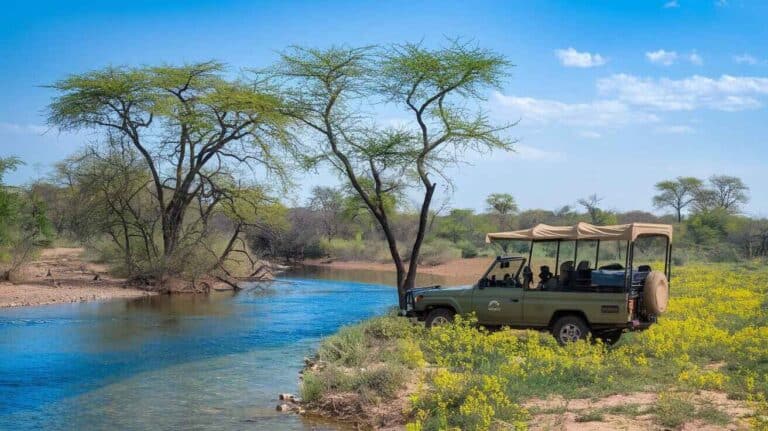
Game drives are usually available at all camps, except for those that are purely water-based camps. After all, where is the vehicle going to drive?
You might not believe me, but the water can get really deep, and a vehicle would literally be driving underwater!
Game drives are done in the early morning and the late afternoon into the evening, so twice a day. Some camps do offer night drives, but not all camps, so if this is something you definitely want to do, check before you book.
Bush Walks – land & combination camps
Not all camps offer bush walks, or sometimes called nature walks, but if you’re at a camp that does offer this, you should do at least one.
No, you’re not sent out on your own, there are wild animals living there too.
Camps generally do not do bush walks in summer because its the green season (the rainy season) and the bushes are thick and the grass is long, so this makes it difficult to spot animals lurking around.

There also has to be a qualified walking guide in camp at the time you are there. There isn’t always a walking guide in camp, these specially trained guides also need time off, and not all guides are qualified as walking guides.
All walking guides are qualified guides, but not all guides are qualified walking guides.
So again, if this is something you really want to do, think about the season you want to travel in, and specifically request this far in advance, so that a walking guide can be arranged to be in camp.
Mekoro Trips – water & combination camps
Again, check this out before you book. Most water and combination camps have mekoros available. You do not ‘paddle’ yourself, but a person known as a ‘poler’ stands at the back of the mekoro with a long pole and pushes the mekoro through the water.
One person, or maximum two people, will sit in the mekoro and just enjoy the silent gliding along the water.
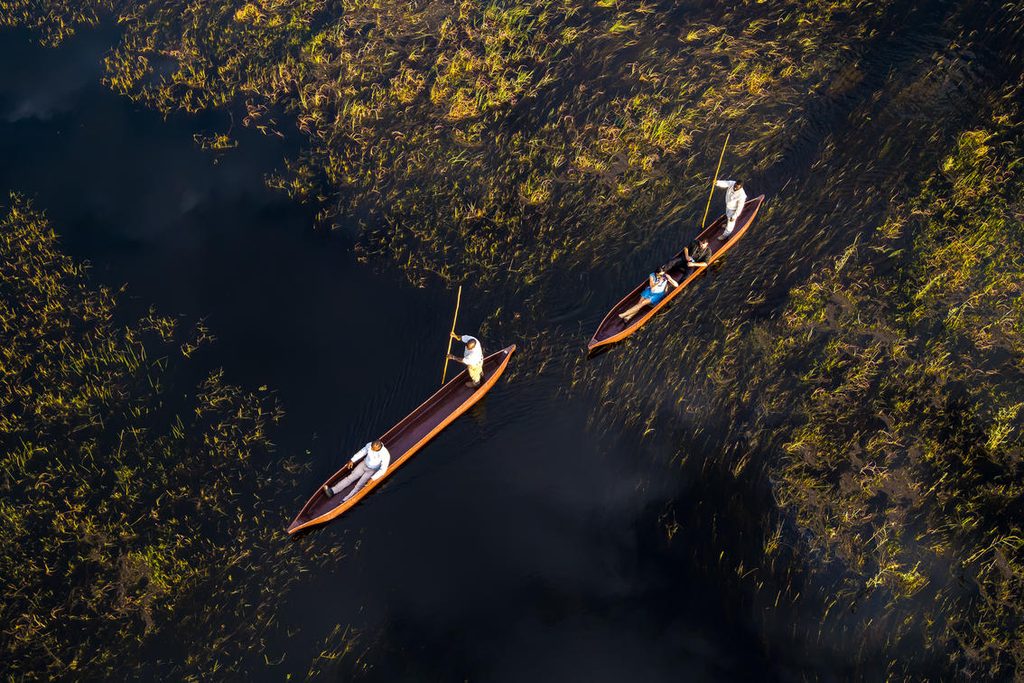
Another head mekoro guide will go out in front of you in his own mekoro and his job is to check for hippos and other obstacles that may be in the water, so that you stay far away from them.
Enjoying a mokoro trip will obviously depend on the water levels – if you book a year or more in advance, just keep in mind that water levels can change and no human on earth has any control over this.
Boating – water & combination camps
Obviously there has to be water for boats. But again, this depends on water levels. Sometimes transfers from one camp to another are also done by boat which is a gorgeous way to explore the hidden nooks around the Delta.
It’s also a different way to explore the area – gliding along through the channels with reed-lined banks, potentially spotting some game, such as elephants, drinking and bathing in the water.
Fishing – water & combination camps
Fishing is done in Botswana seasonally; no fishing is allowed during January and February in accordance with Botswana’s annual fishing closure as this gives the fish a chance to breed.
Fishing is also done on a strict catch-and-release basis.
And don’t except fancy equipment; you use a simple rod and tackle but its lots of fun and being out on the water is a and peaceful way to spend an afternoon.
Just imagine sitting in a boat, in the middle of nowhere, birds chittering, Fish Eagles calling, no traffic and having a drink and snacks next to you while you just chill out and relax.
Birding – all types of camps
Birdlife in Botswana is amazing, even if don’t call yourself a ‘birder.’ There is such a variety of vegetation from one region to the next, so you have excellent opportunities to spot many different species.
Lilac-breasted rollers are my personal favourite, although I have yet to see one ‘roll’ – and I really love the sound of the call of a Fish Eagle.

Pel’s Fishing Owl is another species also on many people’s lists and if you are in the right area at the right season, there is a good chance you will see it.
Star Bed (or Sleep Out) – land & combination camps
A star bed is a fabulous sleep out, not at the camp, but somewhere nearby. And they all range from simple to ultra-luxurious.
You can find them all across Africa, from South Africa, to Botswana, Zimbabwe, Zambia, Tanzania, Kenya and other countries, but not all camps have this.
This is a night out, under the stars, in a completely private setting away from camp. Some camps charge extra for this, and some don’t. You still need to pay for your room in the camp for the night as well, incase you change your mind and want to return to camp.

Why do people want to return to the main camp?
As the dusk turns to night and darkness settles in, it is quiet. Completely quiet. And then you will start to hear the animals.
Some people do become afraid and want to return to camp, which is completely understandable. And sometimes it rains.
So, you do need to have your tent/ room in the camp reserved for you for the night.
Hides – land & combination camps
Some lodges and camps have built hides near to their lodge for the purpose of quietly getting up close and personal with the wildlife.
Some are put together with logs to keep the natural aesthetic of the area, sometimes there might be a sunken container that has expertly been placed underground and transformed into a comfortable breezy spotting area.
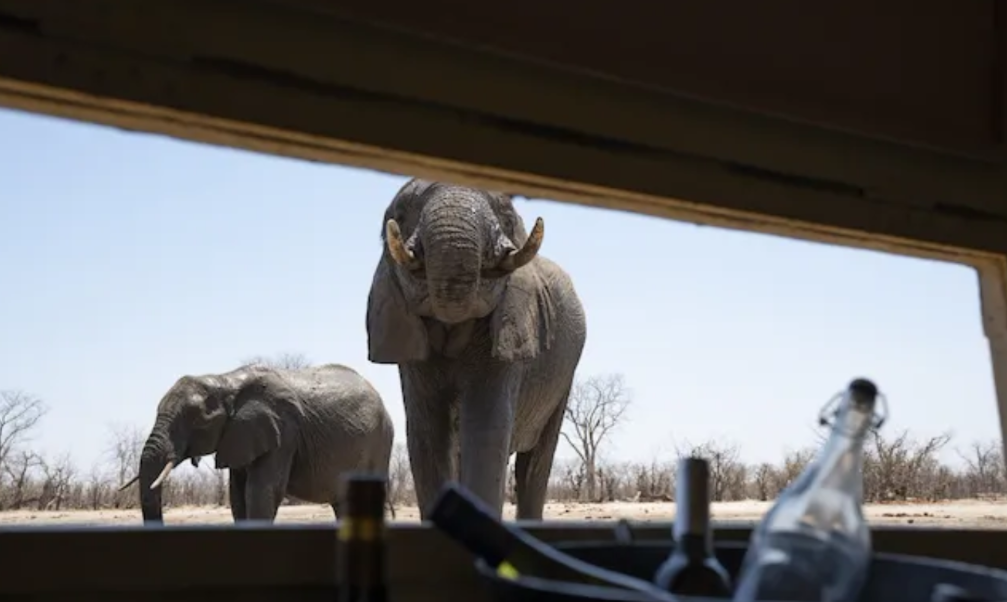
If you want a lodge or camp with a hide, you need to check before you book. Not all camps have them.
Helicopter Flights – land & combination camps
You can book a scenic helicopter flight as an additional activity to do from the camp. This is an additional cost to you and not included in the camp’s rates.
This is an absolutely beautiful way to see the Okavango Delta, and the wildlife beneath you. You can book a scenic flight, or even upgrade your flight with a champagne stop en route, where the heli will land in a certain area and you can enjoy a champagne toast, and then continue your flight before heading back to camp.
Another option is to ask for your flight transfer to or from your camp be in a helicopter. 99.9% of the time, this transfer will be in a fixed wing so you do need to ask.
It is more expensive than a plane, but if you ask, then you can get a quote to book one of your transfer flights in a helicopter.
Which Camps Should You Book?
Decide on what activities you are interested in.
If you know that you are not interested in going on the water, then book a land camp, or a combination camp, so there are activities for you to enjoy.
But there is something special about the water in the Delta.
If you want to experience everything, land and water activities, then book a combination camp if you’re only going for a couple of nights.
Or, if you are staying longer than a three nights, I would suggest you book your safari to include two different types of camps.
Example of a simple 6-night itinerary in Botswana combining two different types of camps:
Camp number 1 – combination camp
Day 1: Fly into Maun Airport. Fly to your first camp. Enjoy high tea followed by an afternoon game drive.
Day 2: Morning game drive. Lunch at the camp. Try some fishing and enjoy a boat trip with sundowners, drinks and snacks.
Day 3: Morning boat trip cruising through the Okavango Delta. Afternoon mokoro trip with sundowners in the bush.
Camp number 2 – land camp
Day 4: Enjoy your final morning game drive. Depart from your first camp and fly to your second camp. Enjoy lunch, siesta and then high tea followed by afternoon game drive.
Day 5: Morning bush walk. Lunch in camp. Enjoy time at the hide if there is one in camp. High tea and afternoon game drive. Spend the night in a star bed.
Day 6: Morning game drive. Depart from camp and fly back to Maun or Kasane and on to your next destination.
The itinerary I’ve given you above is just an example of combining a combination camp with a land camp. On arrival in camp, the camp manager will discuss the activities with you and plan what you want to do, and when.
The above is only an example of what you can do and it will change from camp to camp. You do not need to book specific activities in advance. This is handled on the ground at the camp.
This will give you an amazing time on safari, you will stay in different regions where the vegetation is likely to be different, wildlife might be different and your activities will be different.
My personal recommendation is to combine at least two different types of camps for the best overall experience, and so you don’t miss out on anything!