If there is one thing you shold not leave home without when heading out on a safari, is travel insurance.
It is vital.
When you’re embarking on an adventure as thrilling as an African safari, travel insurance might not be the first thing on your mind—but it should be.
While spotting the Big Five and soaking in the stunning landscapes is exciting, unpredictable events can quickly turn your dream trip into a nightmare if you’re not prepared.
Your argument might be, “Well, I’m not a sickly person.” But, that does not mean your flight out of Edinburgh won’t be delayed, and that you will miss your flight from London to Johannesburg, causing a HUGE knock-on effect. You could end up starting your safari a day or two later than planned. And this happens more often that you would think.
If you don’t have travel insurance, that’s just money down the drain.
Why You Need Travel Insurance for Your Safari Adventure
Safaris are full of surprises—both magical and challenging. From wildlife encounters to remote locations, the reality is that even the best-planned trips can have their unexpected moments.
Travel insurance ensures that you’re covered in case of unexpected medical emergencies, trip cancellations, or lost luggage, giving you peace of mind to enjoy your journey to the fullest.
Here are some convincing reasons why you shouldn’t leave home without travel insurance (plus I have countless other stories from experience):
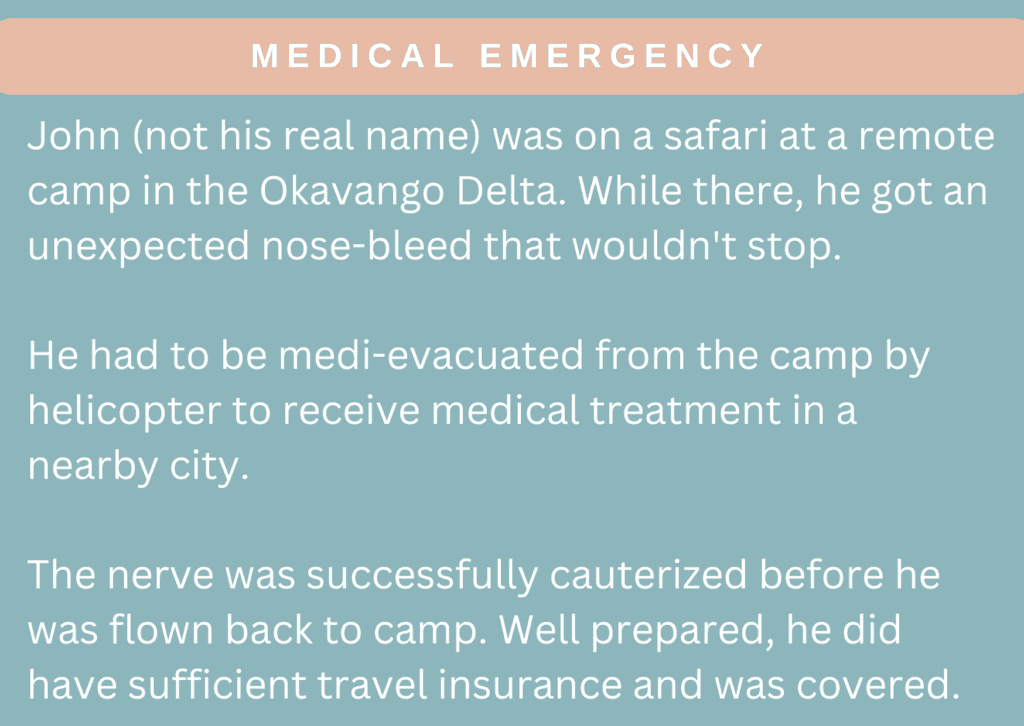
Medical Emergencies: Safari destinations are often remote, the only way to reach them is by a small plane. This means that access to quality healthcare can be limited. If you fall ill or get injured (whether it’s from something as simple as a stomach bug or a more serious accident), the cost of evacuation and treatment can skyrocket. With the right insurance, those expenses are covered.
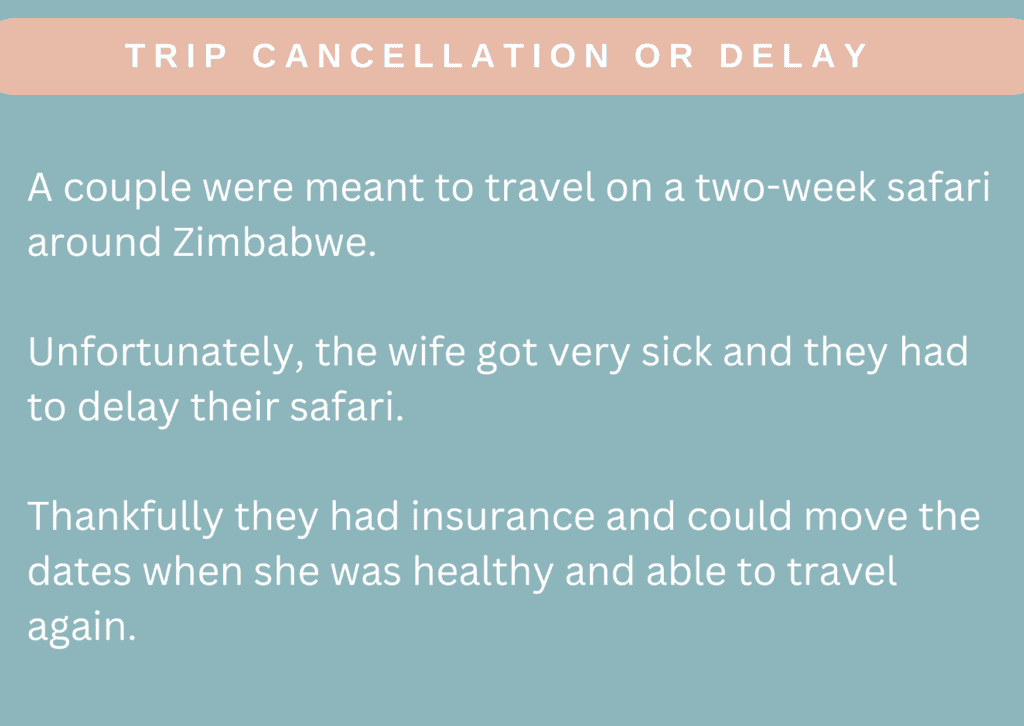
Trip Cancellations or Delays: Life happens, and sometimes plans change. If your safari is canceled due to unforeseen events like extreme weather, political instability, or even a personal emergency, travel insurance ensures that you can recoup your non-refundable expenses.
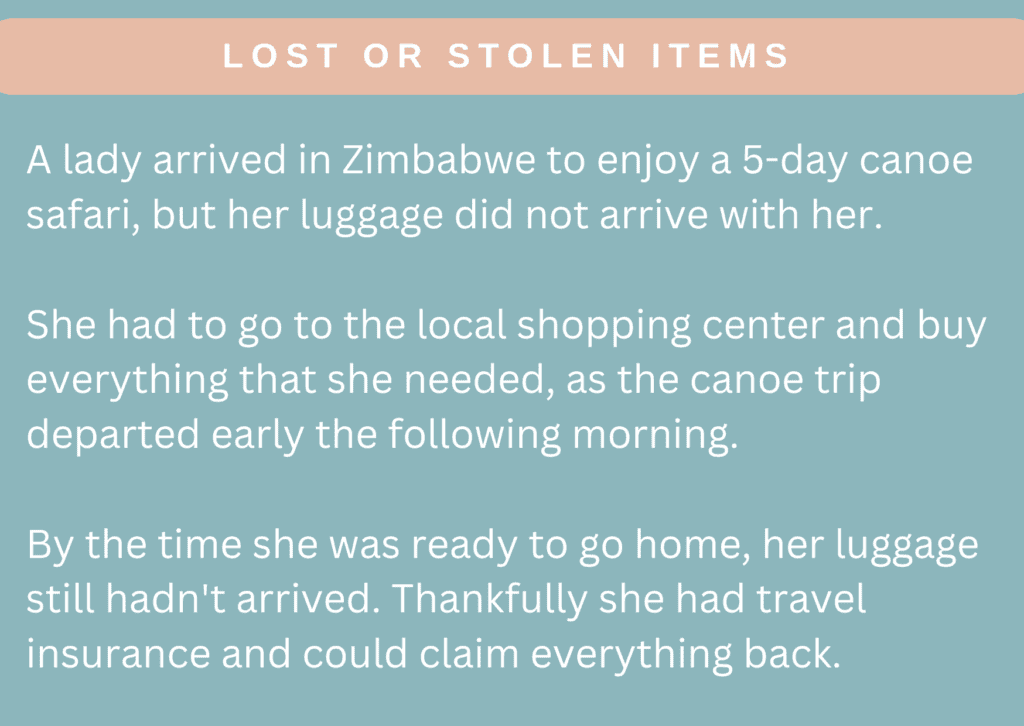
Lost or Stolen Items: Losing your passport, luggage, or even your camera full of safari memories can be devastating. Insurance helps replace lost items or provide compensation so you’re not left stranded or out of pocket. Out of all of those, lost luggage is the most common and it never really happens because of anything you’ve done, it’s usually the airline.
Who Should Take Out Travel Insurance?
Simply put: e.v.e.r.y.o.n.e. Whether you’re a seasoned traveler or on your first safari, travel insurance is essential. It’s particularly crucial for:
Families: Safaris are a popular choice for family adventures, but with kids in tow, the risk of accidents or illness increases. Travel insurance can cover medical emergencies, trip cancellations, and more, ensuring you’re not left with hefty bills.
Solo Travelers: If you’re traveling solo, insurance provides a safety net if something goes wrong. It can cover everything from medical evacuations to emergency assistance, ensuring that even without a travel companion, you’re never truly on your own.
Older Travelers: Seniors, or those with pre-existing conditions, might face higher risks while traveling. Comprehensive travel insurance can cover medical issues, even in remote safari locations, giving you and your loved ones peace of mind.
Adventure Seekers: If you’re planning on adding adventure activities—like hot-air ballooning, bungee jumping, or hiking—to your safari, you’ll want to ensure your policy covers these high-risk experiences.
What Should Travel Insurance Cover?
Not all travel insurance policies are created equal, and it’s important to choose one that fits the unique needs of a safari trip. Here’s what your policy should include:
Medical Coverage: Look for comprehensive medical coverage, including emergency evacuation. Safari destinations can be remote, so having coverage that includes airlift or medical repatriation is crucial.
Trip Cancellation or Interruption: Ensure your policy covers cancellations due to illness, injury, or other unforeseeable events. This will protect you from losing money on non-refundable deposits, flights, and accommodations.
Baggage Loss or Theft: If your luggage or valuables are lost or stolen, insurance can reimburse you for replacement costs, helping you continue your journey without added stress.
Adventure Activities: If you plan to engage in activities beyond standard game drives, make sure your policy covers adventurous experiences like hot-air ballooning, hiking, or even scuba diving.