Largest Wildlife Migrations in Africa You Shouldn’t Miss
Africa is home to some of the most jaw-dropping wildlife migrations on the planet!
Whether you’re a nature lover, a wildlife photographer, or someone who just can’t resist a good bucket list adventure, these migrations should not be missed.
Africa naturally brings you some of the best shows on the planet!
The Great Migration
Species: Wildebeest & Zebras
Where: Serengeti (Tanzania) & Maasai Mara (Kenya)
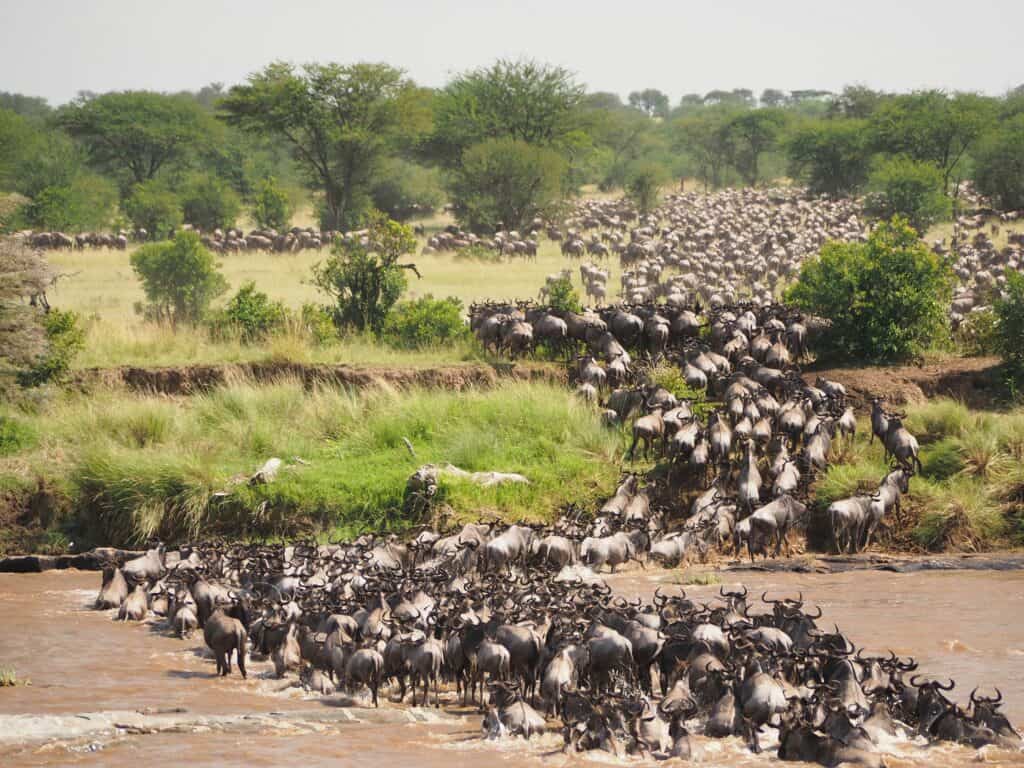
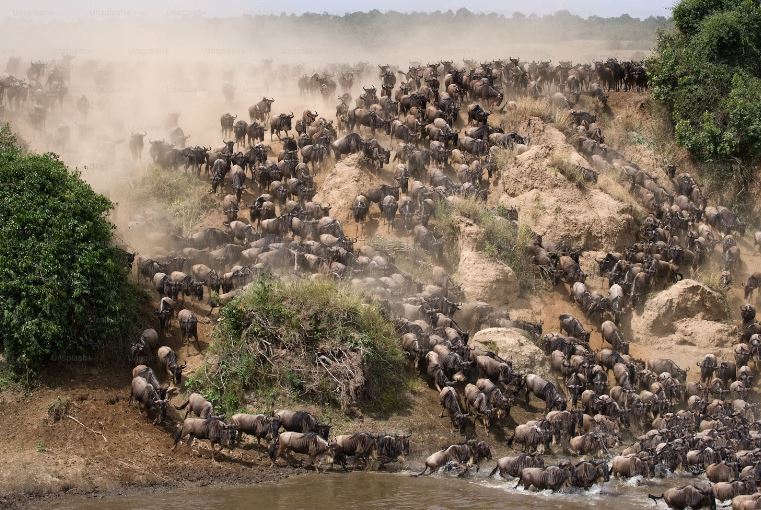
What it’s about: The Great Migration is one of the most famous wildlife spectacles in the world. Over 1.5 million wildebeest, 200,000 zebras, and antelope move in a circular journey in search of fresh grazing lands. The most thrilling moments happen when the animals make their dangerous river crossings, dodging hungry crocodiles and lions lying in wait on the other side.
Disclaimer: In recent years this has become so overpopulated with vehicles trying to push their way to the front row to catch the crossing, it’s become a problem for the animals when they try to run up the bank once they have crossed the river successfully. It will be interesting to see how the national parks handle this.
When to visit: The animals never stop moving, which means it is year-round, just the location changes as the animals follow the rains and fresh grass between Kenya and Tanzania. The most popular events are the Grumeti River crossing generally around May to July, while the Mara River crossing happens around July to September.
Best lodge to stay at: This will vary depending on the time of year and where the migration is likely to be. If you’re booking a year or so in advance, nobody, not even the best guide or ranger can guarantee exactly where the animals will be the following year. If you want to be in the thick of it, I highly recommend that you book your stay in a mobile tented camp as this moves with the animals.
The Bat Migration of Kasanka
Species: Straw-Colored Fruit Bats
Where: Kasanka National Park, Zambia
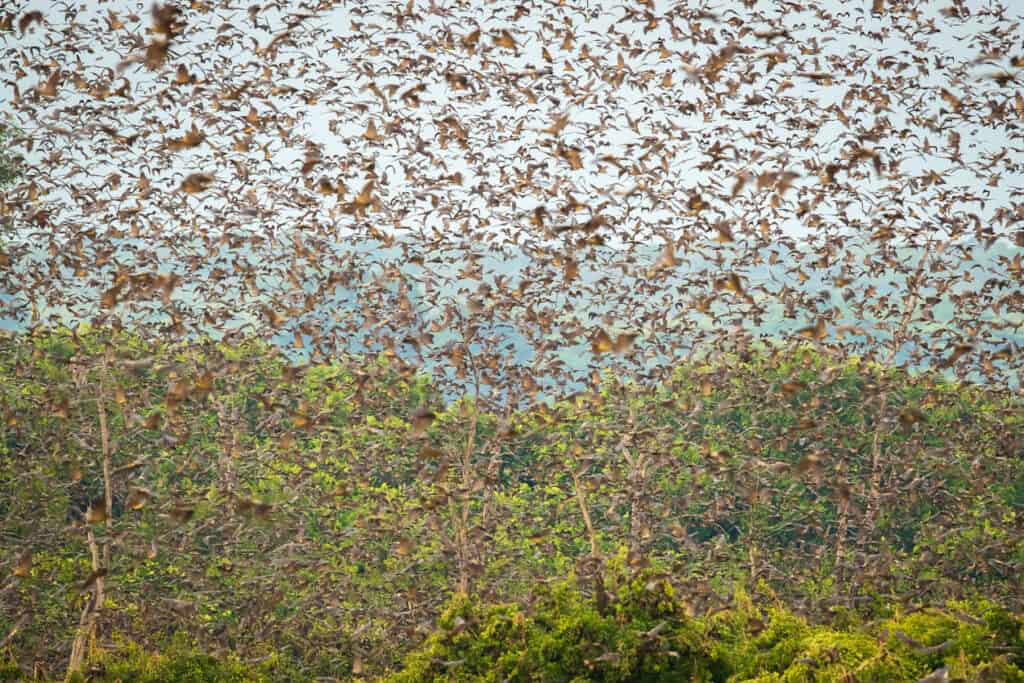
What it’s about: Imagine millions and millions of bats darkening the sky at sunset—an eerie yet breathtaking scene! This migration sees an estimated 10 million straw-colored fruit bats arriving in Kasanka National Park in Zambia. They come from the Congo Basin, attracted to the juicy fruits in the park’s swamp forests.
When to visit: The bats arrive in October and stay until early December, peaking in November. Make sure to catch them at dawn or dusk for the best experience.
Good to know: Accommodation is in the park and is quite basic, but clean and comfortable. It is really off the beaten path so if you’re looking to get away from city life, look no further! You are more likely to spend money on getting there, than on the actual accommodation. However, if you do get to see this, you will certainly have bragging rights!
Best lodge to stay at: Wasa Lodge
The Wildebeest Migration (Liuwa Plains)
Species: Zebra
Where: Liuwa Plains National Park, Zambia
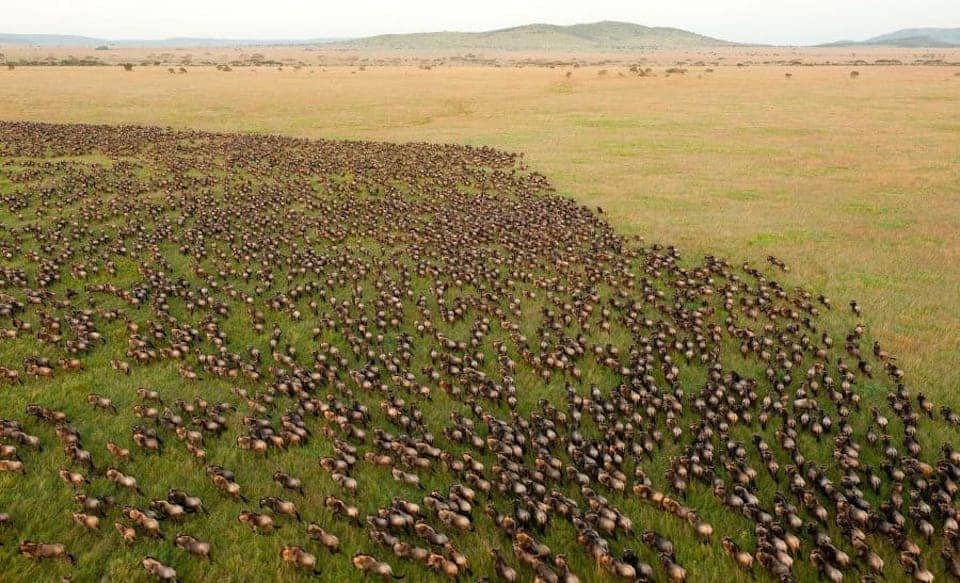
What it’s about: Most people know of The Great Migration in East Africa, but not so many know about the second one which happens on the Liuwa Plains in western Zambia. Thousands of zebras and wildebeest migrate across the plains, following the rains and fresh grass. This remote park offers fewer crowds, giving you a more intimate safari experience with a backdrop of wide, open spaces. Along with zebras, you’ll spot wildebeest, lions, and the park’s iconic hyena clans.
When to visit: The zebra migration takes place from approximately October to December, just before the rainy season begins in full force.
Best lodge to stay at: King Lewanika Lodge
The Zebra Migration (Botswana)
Species: Zebras
Where: Makgadikgadi & Nxai Pan National Parks, Botswana
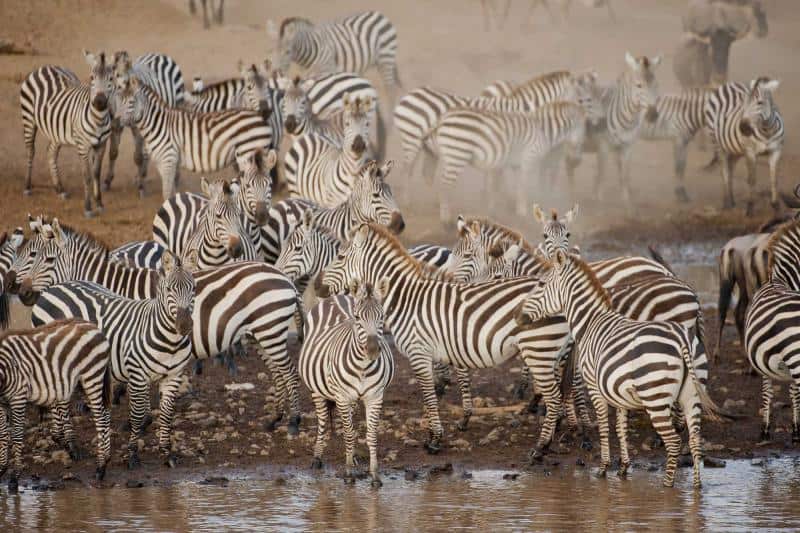
What it’s about: This is another migration that not many people are aware of. While zebras often join wildebeest during the Great Migration in East Africa, they have their own journey that’s equally impressive. Thousands of zebras migrate between Botswana’s Chobe River floodplains in the north, and the Makgadikgadi salt pans further south. Scientists believe they do this in search of the richness in the pans, but as dry season approaches and the earth’ ‘s salt pans become cracked, they head back up into the Okavango Delta and towards Chobe. Again, this is only at certain times of the year.
When to visit: The migration generally starts after the first rains in November and continues through March. For the best views, plan your trip around January and February.
Best lodges to stay at: Nxai Pan or Leroo La Tau
Flamingo Migration: Lake Natron & Lake Bogoria
Species: Lesser Flamingos
Where: Lake Natron (Tanzania) and Lake Bogoria (Kenya)
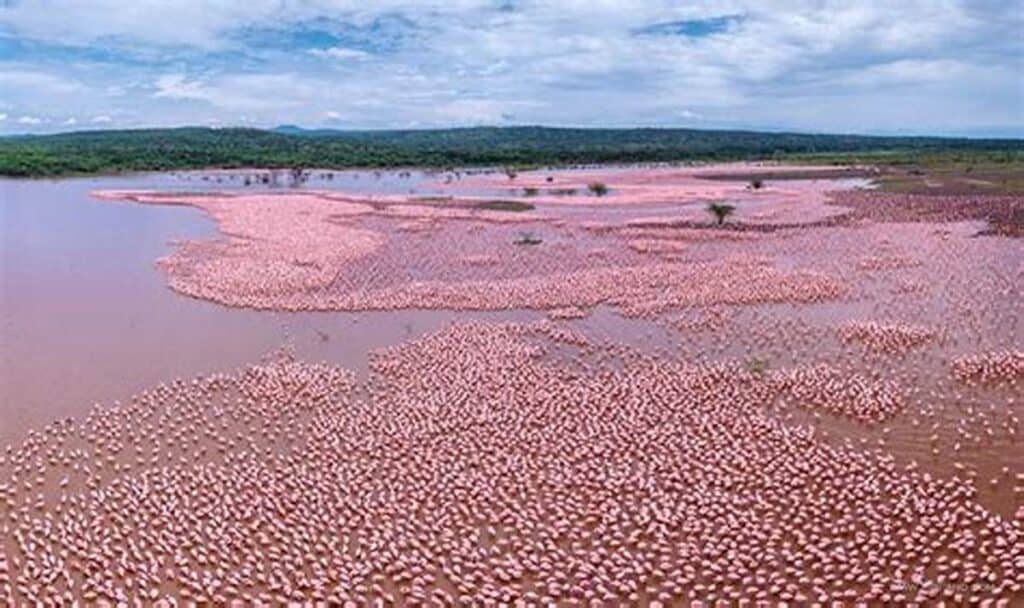
What it’s about: These long-legged, pink birds gather in huge numbers at saline lakes in East Africa, creating a gorgeous sea of pink. Lesser flamingos migrate to find the best breeding and feeding grounds. Their movements between lakes in Kenya and Tanzania are one of the most visually stunning spectacles in Africa.
When to visit: Flamingos are present year-round, but the best time to see large congregations is during the breeding season from October to December.
Best lodge to stay at: Tanzania – Lake Natron Camp and in Kenya – Island Camp Baringo
Elephant Migration
Species: African Elephants
Where: Chobe National Park (Botswana), Hwange National Park (Zimbabwe), and parts of Namibia and Zambia
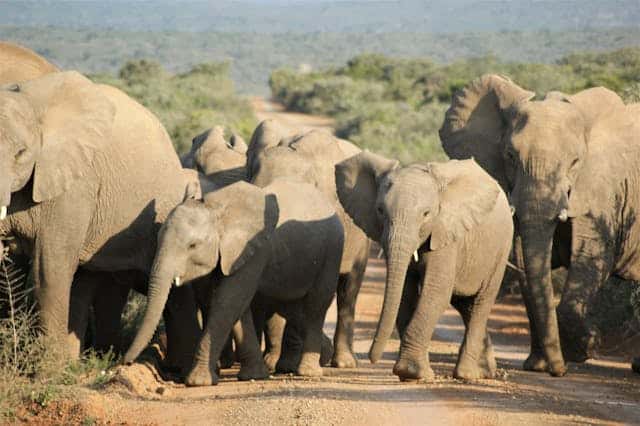
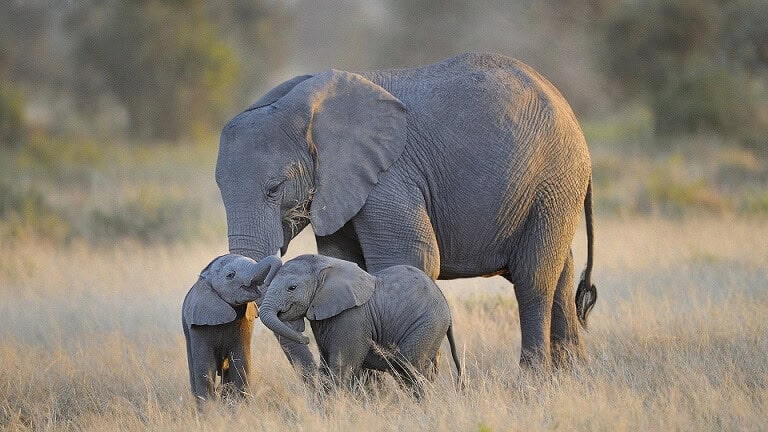
What it’s about: Known for their intelligence and strong family bonds, approximately 100,000 African elephants migrate from Hwange National Park in Zimbabwe, across to Botswana when the wet season starts. Walking at 4 – 6kms speed, this is an impressive task! This journey can take them across hundreds of kilometers, and you’ll spot them in herds, peacefully roaming through national parks.
When to visit: Usually best during the wet season, November – December but know that there are very likely to be thunderstorms. They are short and do bring much needed relief to the African heat, but it is good to be aware.
Best lodge to stay at: Look for lodges in Hwange National Park, Zimbabwe, such as Nehimba Lodge.
Whale Migration Along the African Coast
Species: Southern Right Whales & Humpback Whales
Where: South Africa (Hermanus, Western Cape) and Mozambique
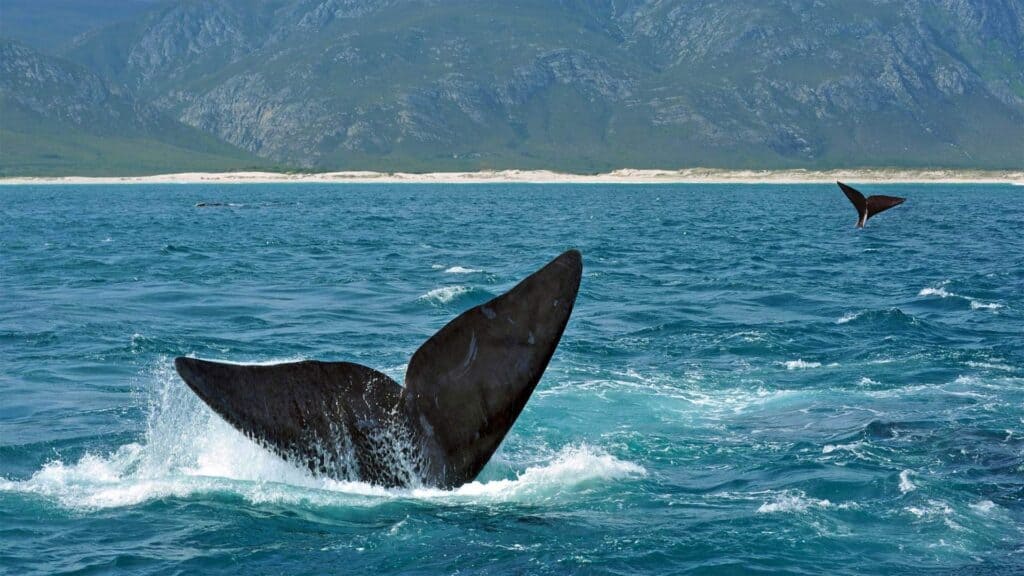
What it’s about: It’s still Africa so I’m including the whale migration, as you can plan an itinerary to include land animals as well as the silent swimmers. These gentle giants migrate from the icy waters of Antarctica north, to the warmer waters of Southern Africa to breed and give birth. Watching whales breach and slap their tails is an unforgettable experience. The South African coastline, especially around Hermanus, is one of the best places in the world to spot them but you can also spot them, often close to the shore along the False Bay Coast in Cape Town.
When to visit: From June to November, with peak sightings around September and October.
Best lodge to stay at: The town of Hermanus, two hours from Cape Town, is the best place to be and the whales calve here and get quite close to the shore. Nearby in Gansbaai you can book a trip out to sea with Marine Dynamics to see the whales and Marine Big 5. Otherwise, when they move towards Cape Town you can often see them along the coast from Simon’s Town up to around Kalk Bay, so you can stay anywhere and drive to the coast, but Hermanus is still the better choice.
The Sardine Run
Species: Sardines, Dolphins, Sharks, & Birds
Where: Eastern Cape and KwaZulu-Natal coastlines, South Africa
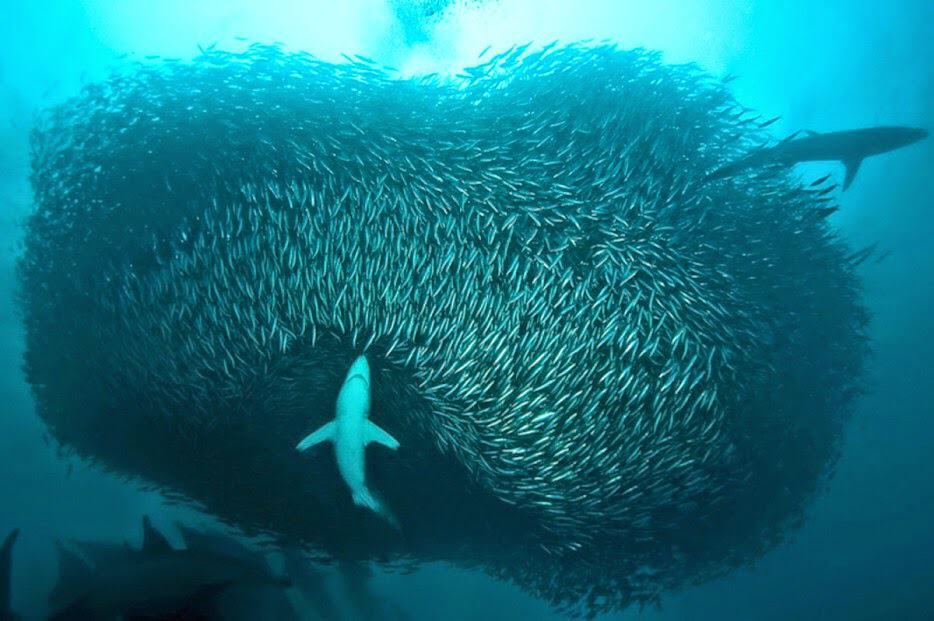
What it’s about: This one is quite a spectacular show. Also known as “The Greatest Shoal on Earth,” the Sardine Run is not just about tiny fish; it’s a full-on oceanic extravaganza! As billions of sardines migrate along the coast of South Africa, they attract a frenzy of predators, including dolphins, sharks, and seabirds, all feasting on the schools of fish. Divers and snorkelers flock to this event for a chance to witness the feeding frenzy up close.
When to visit: The Sardine Run typically occurs between May and July. Timing can be tricky, but it’s well worth the effort if you get to see it!
Best lodge to stay at: There isn’t one specific suggestion, but guest houses and Air Bnbs along Kwazulu-Natal’s south coast are usually the best options. Contact a sardine run specialist for in depth details.
Which of These Would You Want to Experience?
Africa’s wildlife migrations are not just about seeing animals—they’re about experiencing nature in its rawest, most awe-inspiring form where the wildlife continues to do naturally what it’s done for centuries.
Whether you’re on a safari or diving into the ocean, these migrations will leave you feeling connected to the wonders of the natural world.
Have you experienced any of these? Let me know in the comments!
Leave a Reply