8 Tips to Help You Find the Big Five on Safari
If you’re dreaming of seeing Africa’s iconic animals up close, use my top tips to help you find the Big Five on safari.
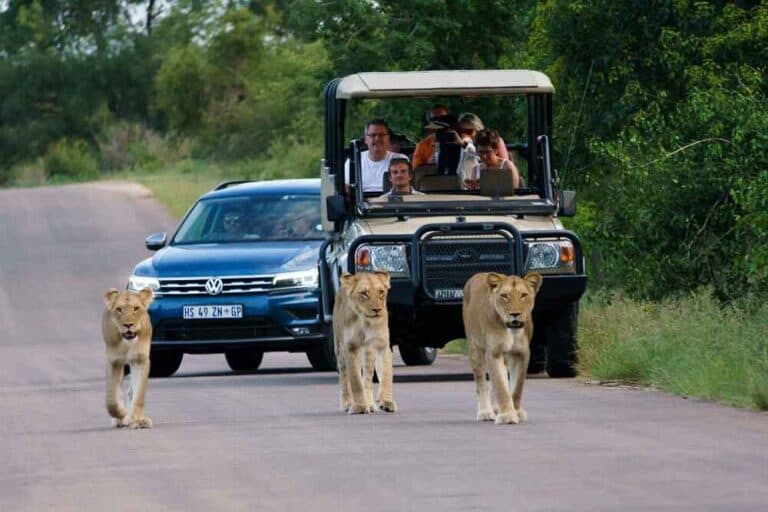
Imagine the thrill of sitting silently in your game drive vehicle and out of nowhere spotting lions heading towards you, or watching a massive herd of elephants appear out of nowhere!
Planning the perfect safari can be overwhelming as there are so many logistics involved in a trip, but trying to see all the wildlife on your bucket list too?
But don’t worry—I’ve got you covered.
In this guide, I’ll share with you some of my best tips to help you find the Big Five on safari and prepare for an amazing African adventure.
What Are the Big Five?
Long ago, the term “Big Five” was originally coined by big-game hunters.
It wasn’t the size of the animal that they were referring to, but rather how dangerous and difficult-to-hunt animals they were.
However, the focus shifted from hunting to conservation and responsible wildlife viewing, and the Big Five have become many of the animal that people want to see ‘ in real life.’
Each of the Big Five animals holds a distinct place in the African ecosystem, contributing to the delicate balance that sustains the continent’s remarkable biodiversity.
Lion
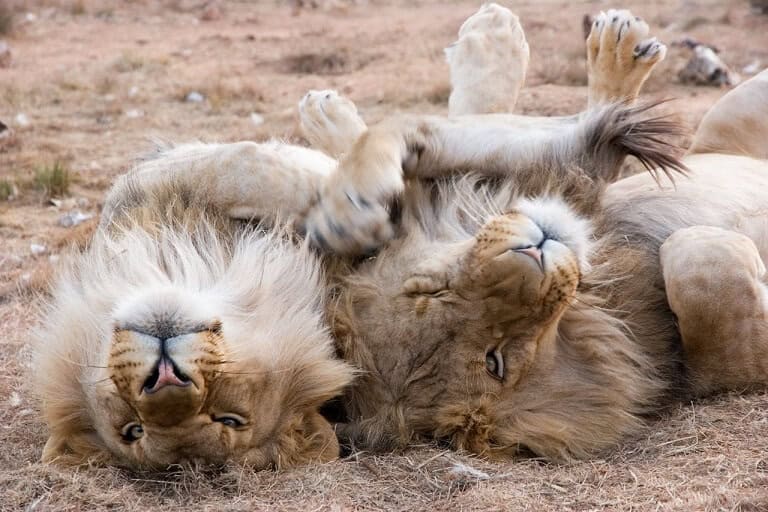
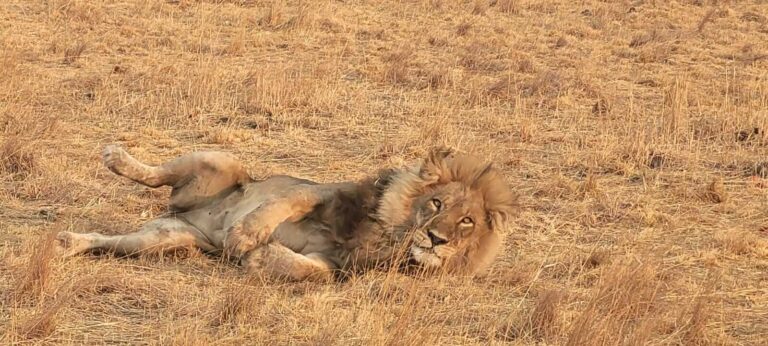
The lion, often referred to as the “king of the jungle,” is a powerful predator and a symbol of strength and courage. These majestic kitties are known for their impressive manes (males), social behavior, and hunting prowess.
Observing a pride of lions in their natural habitat is a quite a heart-stopping experience, as they hunt, sleep, and play on the savanna. Especially the cubs!
Best Places for Spotting Lion
- Zambia
- South Africa
- Botswana
- Tanzania
- Kenya
- Zimbabwe
Even the hot, dry deserts of Namibia have desert-adapted lions. These animals are amazing and constantly researched to learn about the ways in which they’ve adapted to survive in the dry deserts and dunes.
It’s never guaranteed of seeing lions, but they are found quite often.
Elephant
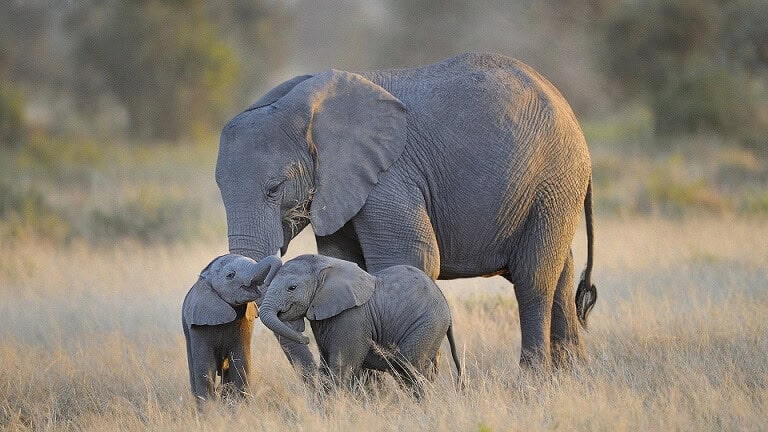
It really is an amazing, and humbling, site to see a wild elephant roaming around in its natural habitat. In all honesty, you can’t truly comprehend their magnificent size until you are next to one.
The African elephant is the largest land mammal on Earth and is a true giant. They are highly intelligent and known for their strong family bonds and incredible memory.
It’s also difficult to imagine how quiet they are given their size, but this is due to the way their feet have been constructed, and they soft padded cushion they have. So, even as big as they are, they move incredibly quietly. You often hear them before you see them but not from footsteps – you’ll either hear them trumpeting, or breaking branches from trees when its snack time.
Look out for signs like fresh dung, broken trees and trampled bushes. Ask your guide to show you what the tracks look like on the ground, and how you can tell in which direction they are moving.
Often they will be quite close to you, but because they are standing still behind a bush, you might miss them.
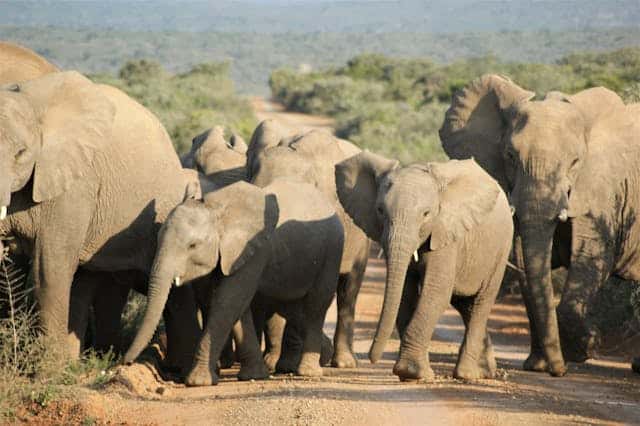
If you go on a safari, you will see that by just being in a vehicle amongst an elephant herd can be a truly moving experience.
Unfortunately, the African savannah elephant is sadly listed as critically endangered, and you might even think I’m lying when I tell you that you can see them in their hundreds in places like Hwange National Park in Zimbabwe (at certain times of the year) or Chobe National Park (Botswana).
It is amazing!
Best Places for Spotting Elephant
- Botswana
- Zimbabwe
- Zambia
- South Africa
- Tanzania
- Kenya
Buffalo
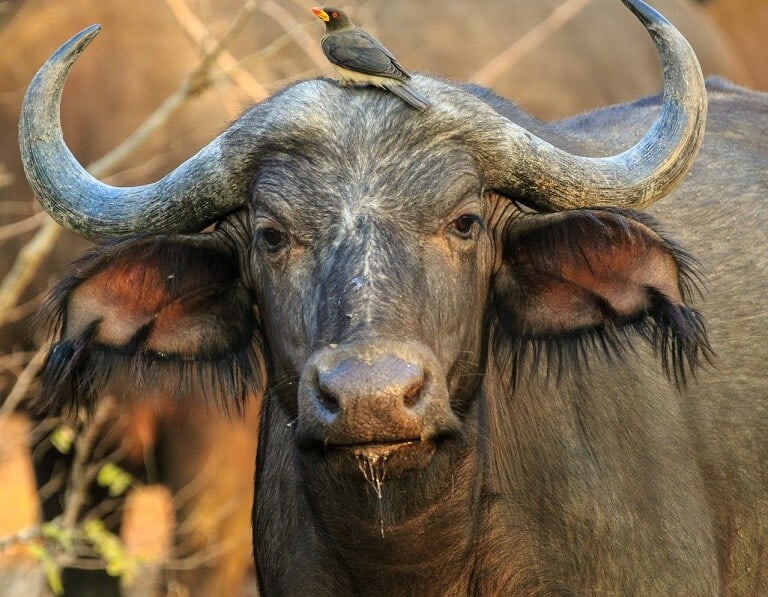
The buffalo is often referred to as the “black death,” but don’t be fooled in thinking these guys are slow or passive.
They are possibly the most highly unpredictable of the Big 5, and I really don’t think they get enough credit for their power.
Years ago, I was in Tanzania and it was a cool, misty morning. I’d grabbed my coffee and taken a stroll round to the pool area; the morning had a jungle-type vibe to it. As I stood on the one side of the pool, there was a single, lone buffalo on the other side. I was young and didn’t know the power and the unpredictability of these animals but thankfully I stayed on my side. Nothing happened, but knowing what I know now, that definitely would have been a serious heart-stopping moment.
These massive bovines are known for their impressive horns, their ability to charge with incredible speed, and their fiercely protective nature.
As they get older, the males seperate from the main herd and are known as ‘dagga boys’. They usually live out there days alone but they can get into small groups, and these guys are extremely dangerous. They’re all dangerous, but these old, solitary guys are even more so.
They seem to be constantly grumpy, they have poor eyesight and will stare at something for a while before reacting. They also have a very good sense of smell, so they are likely to smell you out, before you even know they’re there. The problem with them again, is their unpredictability, and you do not know how they will react.
A couple of years ago I was walking along a boardwalk at a gorgeously remote camp in Zambia, called Wilderness Shumba Camp (beautiful camp, by the way) and there were two of these dagga boys on the ground below the walkway (I think it must’ve been about 2 or so metres high), and they were not happy.
These two were looking up at us, snorting, and the one even started butting the post of the walkway with his head. One of the posts that is actually holding the entire walkway up! Again, nothing happened thankfully, but it was an adrenalin moment.
When they are together, spotting a herd of buffalo in the wild can be a thrilling and humbling encounter. There can be hundreds together at a time. These herds can be huge!
I’ve have seen massive herds of buffalo in Hwange National Park in Zimbabwe, and Kafue National Park in Zambia – they’re definitely out there.
And they stick together. Have you ever watched one of those YouTube videos when a lion is trying to take down a buffalo and the rest of the herd rallies around it, to protect it and keep the lion from eating their friend?
Go and look for them – it is incredible! I think secretly they live with that motto – ‘no-one gets left behind.’
Best Places for Spotting Buffalo
- Zimbabwe
- Zambia
- Tanzania
- Botswana
- South Africa
Leopard
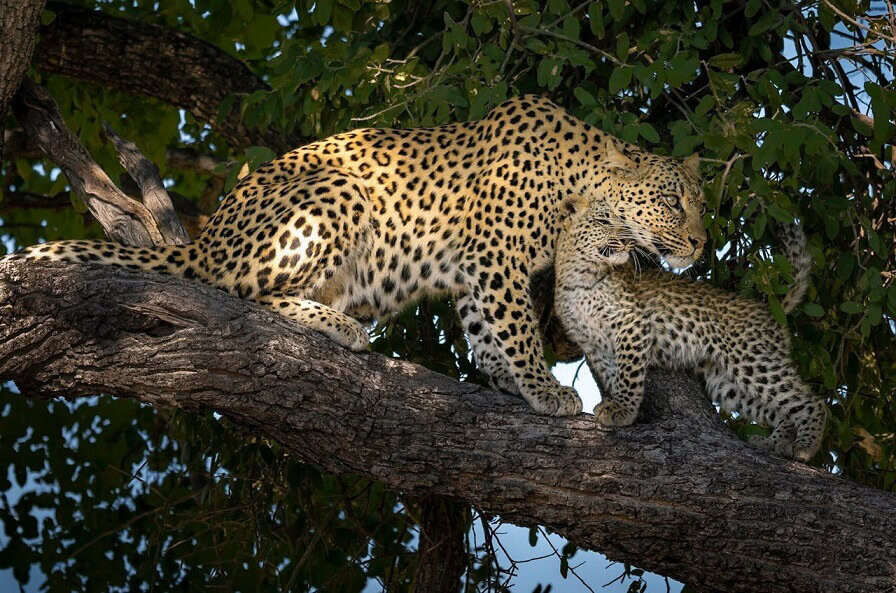
The leopard, by far the most elusive of the Big Five, is a very skilled predator known for its stealth, agility, and gorgeous spotted coat.
These solitary cats are the absolute masters of camouflage, making them very challenging to find, but this can make your safari a lot more interesting!
It also gives you a, “Yes, we found one!” euphoric feeling… you really need to do it to know what I’m talking about. And even if you see only one, it is amazing.
I remember being on a game drive once at Singita, South Africa. We had stopped the vehicle, and the guide was looking for something, and the next thing this cat stood up almost right next to us, practically next to the vehicle, and walked off.
No-one had any idea that it was there.
It’s also why I really love Africa. You never, ever know what you’re going to find when you go on a safari.
Catching a glimpse of a leopard in its natural habitat is a real privilege and, usually, they appear when you least suspect them.
Best Places for Spotting Leopard
- South Luangwa National Park, Zambia
- Sabi Sands, South Africa
- Botswana
- Tanzania
- Kenya
Rhinoceros
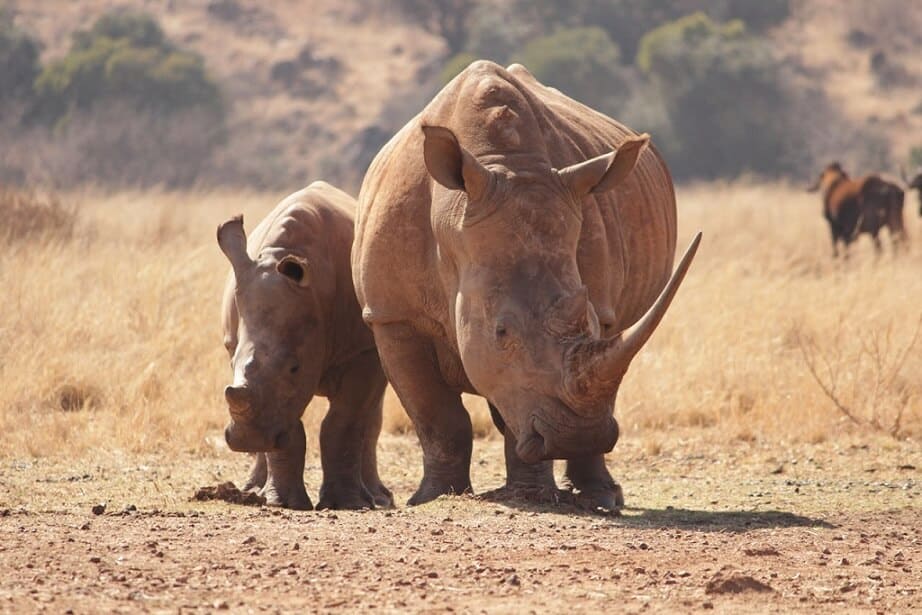
The rhinoceros is definitely a prehistoric-looking creature, and is the second-largest land mammal after the elephant.
Sadly, rhinos are still being heavily poached for their horns, leading to their endangered status.
Spotting a rhino in the wild is a rare and humbling experience, and one that highlights the importance of conservation efforts to protect these iconic animals.
If you want to be assured of seeing rhino, then stay at a camp such as Wilderness Toka Leya in Livingstone, Zambia.
They work closely with ZAWA, the Zambian Wildlife Authority, who monitor the rhino 24 hours a day and you can go and see them in their natural habitat (ie not in a zoo or caged area). If you’re staying at a lodge, or have booked this as a tour, your guide will drive you to the area inside the park where they are, you get out and walk with the ZAWA guides to be closer to them.
Best Places for Spotting Rhino
- South Africa
- Namibia
- Zimbabwe
- Zambia
Why Do People Want to See the Big Five?
Seeing them in their natural habitat is definitely on any African traveller’s bucket list.
Spotting the Big Five on one safari trip is considered such an achievement for many travelers.
However, what I’ve learned over the years, is that many people who travel on a safari a couple of times, start to want to see other creatures such as pangolin, giraffe, hippos, the Little Five, the Ugly Five (shame, I always feel bad – its like they’re so ugly that they’re cute), and others.
But that still doesn’t take away from the awesomenesss of going around a bush and seeing one of the Big 5 animals.
The thrill of encountering a lion in its natural habitat, observing the quiet giants of the elephant herd, or catching a glimpse of an elusive leopard can be truly awe-inspiring.
Tip #1 – Be in the Correct Location
If you want to try and see the Big 5, you are going to have to travel to where they are found naturally.
It’s not only the country or the reserve that you visit, but it could also come down to the lodge that you stay at.
For example, earlier this year I was in Zimbabwe. We didn’t see a single leopard in Hwange National Park (that’s not to say they aren’t there), but we did see one solitary leopard in Mana Pools National Park.
We had been out for hours, rounded a corner and it was just standing there, smack bang in the middle of the dusty road.
Another example is Shumba Camp in Zambia; it is really well-known for its lion sightings. The Busanga Plains where Shumba Camp is located, is well-known for its lion prides.
It also comes down to luck.
Tip #2 – Sometimes You Need to Look Up
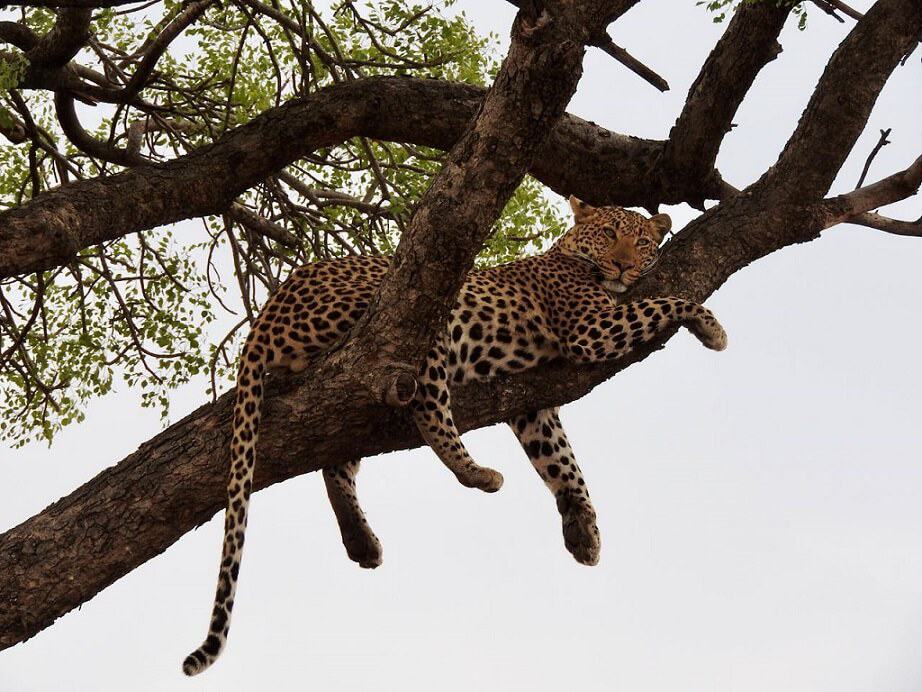
When you are out in the bush, don’t forget to look up. Leopards enjoy lying in trees.
What leopards lack in size (they are the smallest of the Big Five), they make up in strength and are capable of taking down prey up much larger than themselves.
They are also powerful enough to drag their kill up into a tree, so they aren’t trying to eat, and scare off wild dog, hyena and other opportunists, at the same time.
Tip: If you see trees while you’re on a game drive, look for a tail hanging from the branches.
Leopards are also nocturnal so make sure you jump on an early morning or sunset game drive, and you might be lucky enough to find one.
Tip #3 – Choose the Right Time of Year for Your Safari
Different seasons can bring about changes in animal behavior and movement patterns, as well as weather conditions that affect visibility.
For example, the dry season which is winter(typically from June to October) is the best time to spot the Big Five, along with a lot of other wildlife, as the animals congregate around water sources, making them more easily observable.
Tip #4 – Consider Travelling to One of the Migrations
Africa has various natural animal migrations that happen in HUGE numbers.
READ: Largest wildlife migrations in Africa you don’t want to miss
The migrating animals are often plains game, such as zebra and wildebeest. Now when you get these animals together in the thousands, you are inevitably going to find the predators close behind.
Sad for the plains game – easy pickings for the cats.
Tip #5 – Bring Your Binoculars
If you are going on a safari, invest in a solid pair of binos. These are not provided to you in camp.
Your guide will have a pair but then you’re going to be taking turns using them. When you do this, you can’t hog them, everyone else wants to have a look as well.
Bring your own pair with you otherwise you could honestly miss out on a once-in-a-lifetime viewing opportunity.
Tip #6 – Research Before You Book
Understanding where various Big Five animals are most likely to be found, and what they do throughout the day, can help you anticipate their movements and position yourself for the best possible sightings.
For instance, elephants are known to be more active in the early morning and late afternoon, while leopards are typically more active at night and in the early morning hours.
If there is a specific species you want to try and see, do your homework before you travel. Also, let your guide in the camp know. As him to show you what he’s looking for while he’s trying to find them. You can help.
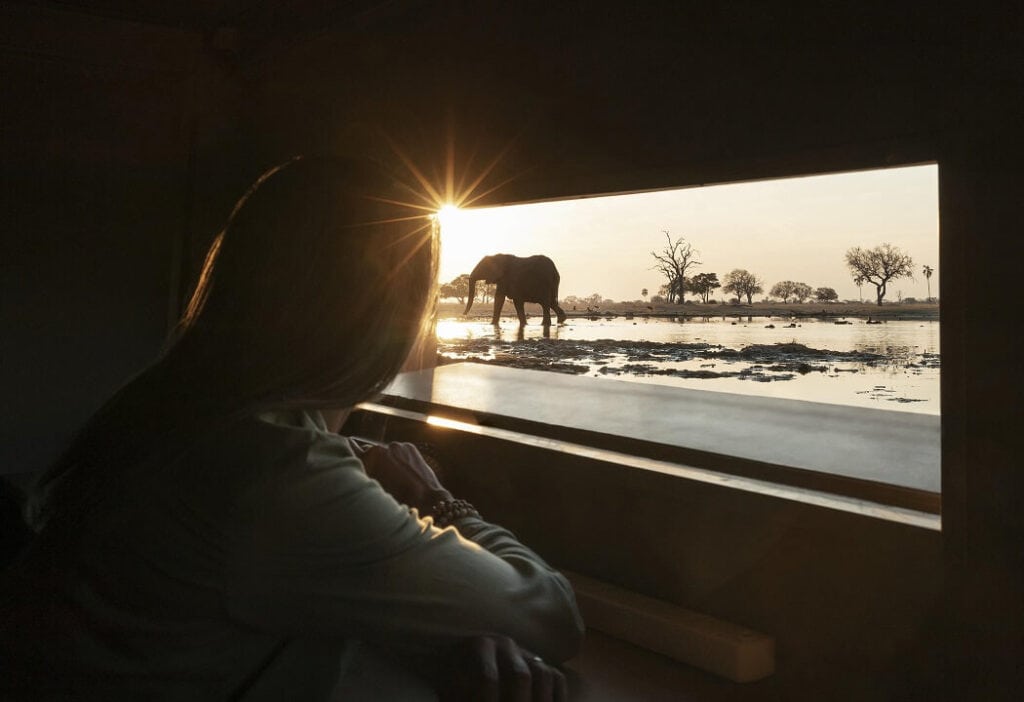
Tip #7 – Choose a Lodge with a Hide
This doesn’t mean you have a guaranteed chance to see any Big 5 animals, but, if they are around and come nearby., you will get a very up-close-and-personal experience with them.
Some hides are sunken, and you can chill out in them with a mini-fan to keep you cool, and a cold Coke or beer, and watch them at the waterhole, with their toes literally in front of your eyeballs.
Other hides are on ground level behind a pile of logs, where you will still be provided with chairs from the lodge, and you can just sit still and watch them in their natural habitat.
Your guide will always be with you at the hides, so please always listen to them.
Tip #8 – Use Your Senses
Yep – your eyes and ears.
This is one of the best tips to find the big five. Your guide knows a lot, but he can’t see everything all at the same time. Ask him what tracks look like, and tell them that you want to try and help track animals.
Get involved.
If they know you want to learn, they will be more than happy to teach you. It’s unique, and it’s fun.
And of course, listen.
Stop chattering and listen.
There are sounds and rustles and chirps and scuffles that can help you to pick up sounds you never would have heard because you were talking.
Pin for Later
Just a Reminder
Let’s take a quick look again at all of the tips I’ve mentioned above:
- Travel to where the animals that you want to see are found
- If you’re trying to find leopard, don’t forget to look up
- Travel at the right time of the year
- Consider visiting an area during one of the animal migrations
- Take your own binoculars with you
- Do your homework before you book your trip
- Consider a lodge with a hide if you want up-close-and-personal with wildlife
- Use your senses
When it comes down to the Big Five animals, no trip to Africa will ever guarantee wildlife sightings.
This isn’t a zoo, its nature. These are animals, and they move as they do in order to find food and to survive.
But, half the fun does lie in the exploring and the learning and trying to find them!
People travel from the furthest corners of the globe to Africa as there isn’t anywhere else on earth quite like the African bush.
Now that you have the tips, do you think you’ll be able to find the Big Five in a 3 day safari, or should you stay longer?
Follow for some safari laughs: The Safari Compass Facebook Page

Leave a Reply