How to Stay Safe Around Wild Animals on Safari
Going on safari in Africa is one of the most exhilarating experiences you’ll ever have, but before you go, it’s a good idea to know how to be safe around Africa’s beautiful wildlife, and this does not mean only the predators.
Well, at least be aware of the basics, you’ll be given a full run-down in camp.
And that means all animals, not only the Big 5.
Whether it’s locking eyes with a lion in the grasslands from the safety of your vehicle, to spotting a leopard lounging in a tree, or watching crocodiles sunbathe by the riverbank, these encounters are unforgettable — but they also come with risks.
As do many, many things in life if we’re being real here.
As a safari expert (not a guide, but someone who lives and breathes African safari travel), I’ve seen travelers make simple mistakes that could have led to serious consequences. And honestly, its mainly because they don’t listen.
So, before you head into the bush, here’s how to stay safe when you’re near Africa’s top predators.
1. Respect the Wild – This Is Not a Zoo
First and foremost: you are in their territory.
It’s like if you swim in the sea, you know there COULD be sharks around. Well, this is like that, but on land, and you’re in the bush.
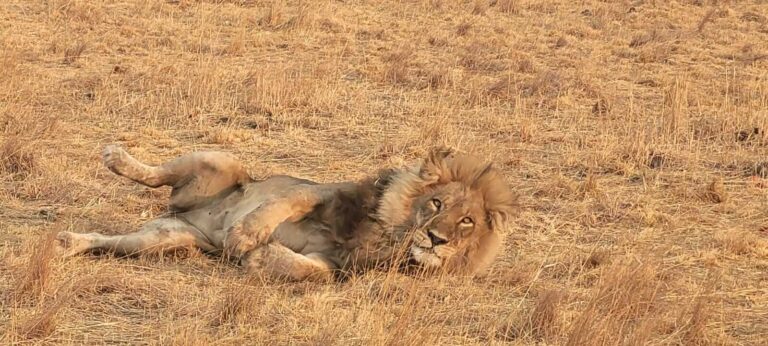
Out there, lions are apex predators, not housecats with a mane. Leopards are silent and secretive, but deadly. Crocodiles? They can launch out of water faster than you think possible.
Even if an animal seems calm, never assume it’s tame or predictable. Lions do not want a pat on the head. A snack, yes. But not a pat.
So this is my first point. You’d think it’s obvious but hey… Never forget that these are WILD animals. You cannot get out of the vehicle and touch them, you cannot get out of the vehicle and pose next to them for a picture. No, no, no. I am still shocked that there are people who think this is safe to do.
Always remember: wild animals react on instinct. Your job is to minimize your presence and observe peacefully, not to test boundaries and see if you’re braver than your buddy sitting next to you. .
2. Stay in the Vehicle — Always
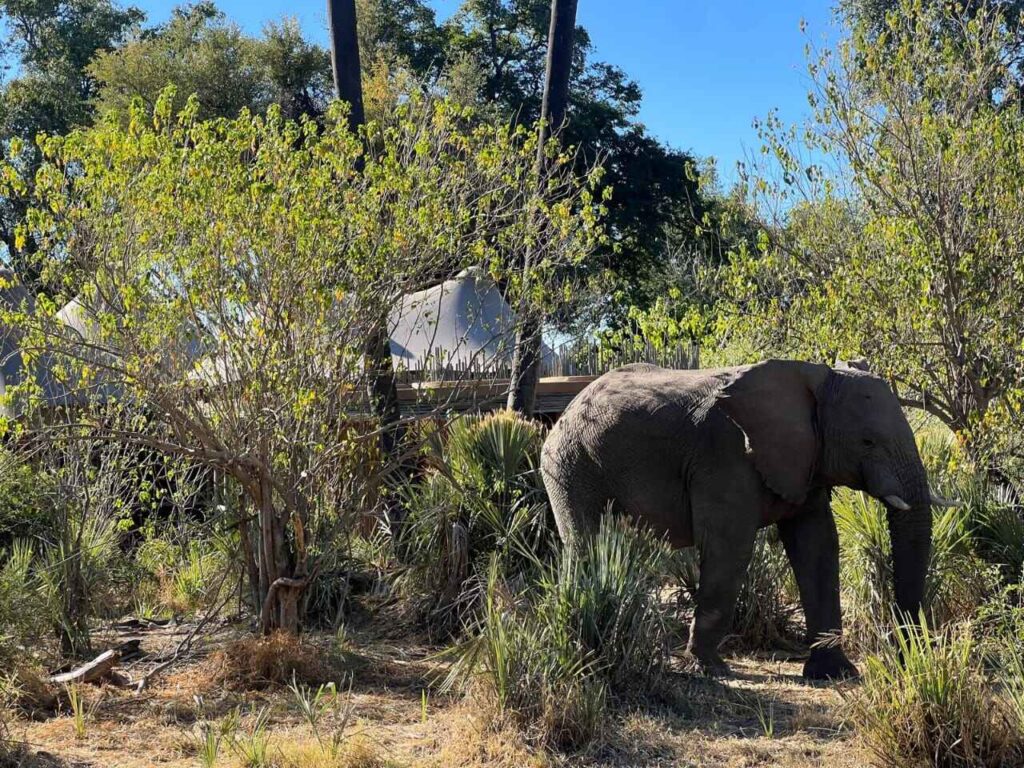
This rule is golden: do not get out of your safari vehicle unless your guide gives you the go-ahead.
Vehicles are perceived as large, non-threatening ‘creatures’ by most predators. But the second you step out, you become a potential target.
Even if the lion is asleep 20 metres away and the view would look so much better without the window frame in your photo, resist the urge! That one step could change everything. They can go from 0 to 100 in a few seconds, and there is no way that you will be able to run away and get back into the vehicle in time.
Another thing your guide will tell you is to keep arms and legs inside the vehicle, and do not stand up in the vehicle.
The animals view a vehicle (with the guide and all the people) as one object. If you stand up, or start waving your arms around, this ‘breaks’ the solid image that they see, and it makes them curious. If you do this, the curious lion can approach your vehicle, and most often, this vehicle does not have doors or windows.
Just listen to your guide, they’re out there with the animals every day and have been trained to read and understand their body language.
Pro tip: Keep voices low, movements minimal, and camera flashes off. Flash photography can agitate animals.
3. If You’re on a Walking Safari – Know the Signals
Walking safaris offer a raw, thrilling experience, but they’re not without risk.
If you’ve signed up for one, listen to your guide.
Before your walk starts, whether it’s for a couple of hours or over a few days, your guide will go over the rules. They will teach you hand signals and explain that you need to walk in single file, step where he steps, and keep quiet.
No walking and talking like it’s a stroll in your local park.
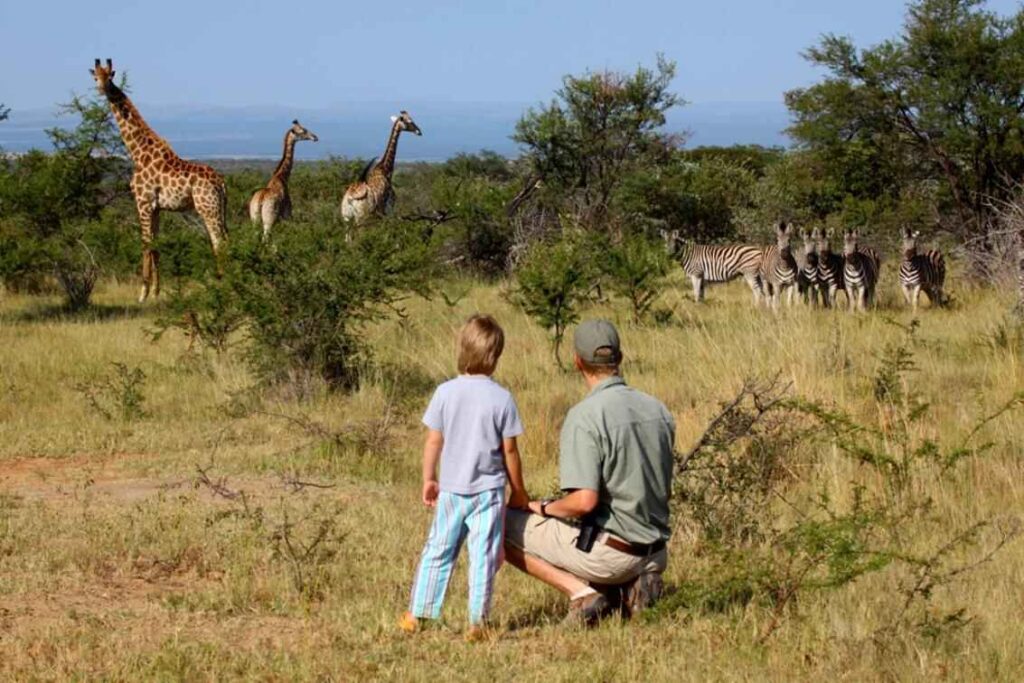
Guides are trained to spot signs of danger long before you see the actual predator. Sudden stops, a raised hand, or a whispered “freeze” mean you freeze. Don’t run. Don’t shout. Don’t reach for your phone. Just freeze and follow instructions.
If you want to stay safe around wildlife, listen to your guide.
And by listening, you will stay safe. It’s such an amazing feeling knowing that you are walking in the open bush. Often you have various antelope, zebra, wildebeest and giraffe quite close to you, who will just carry on minding their own business.
4. How to Behave Around Lions
Lions are powerful but generally lazy during the day, or after they’ve eaten a large meal. That doesn’t mean they are tame.
If you encounter one on foot — whether on a guided walk or by accident — here’s what to do:
- Don’t run. You will trigger a chase instinct.
- Stand tall and back away slowly if your guide tells you to. Keep facing the lion, but don’t make direct eye contact — that can be seen as a challenge.
- Make yourself appear bigger if you’re in a group. Stay close together.
- Speak calmly, or don’t speak at all. Listen to your guide. Yelling or panicking might provoke the animal.
Truth is, most lion charges are bluff charges — terrifying, but not meant to connect. Do not run.
This is not the time to learn if you have a ‘flight or fight’ reaction.

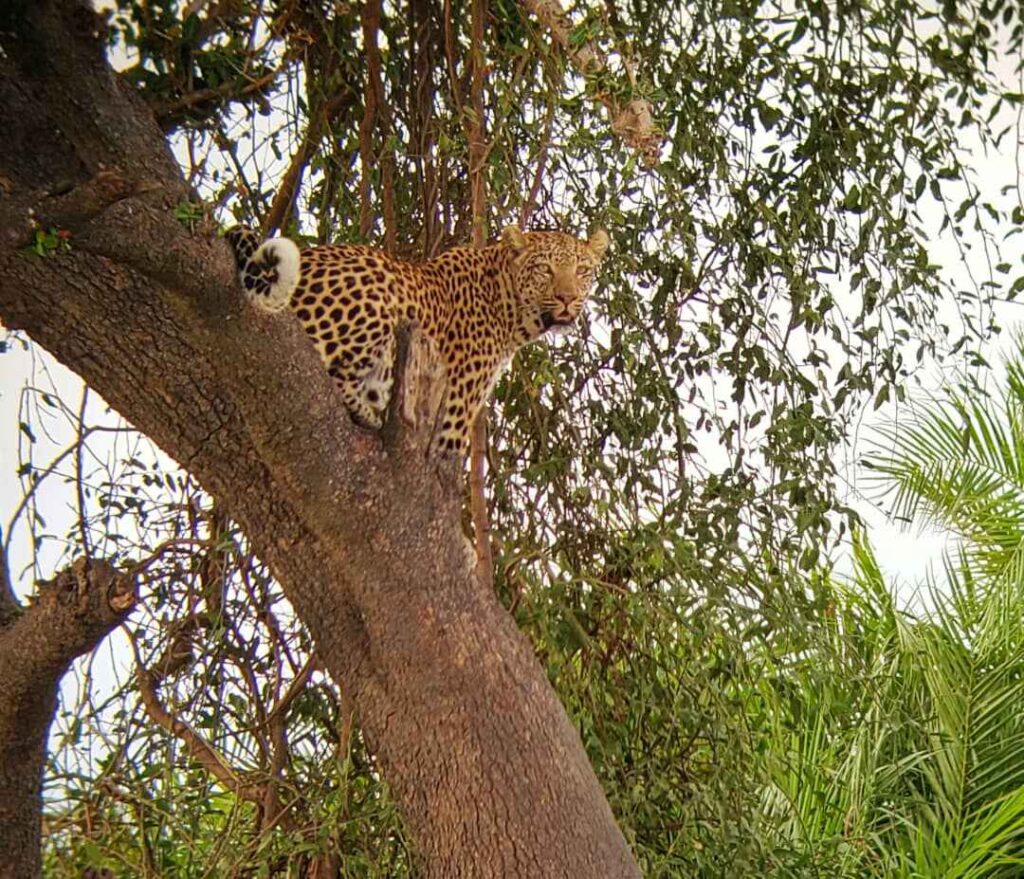
5. Dealing With Leopards – The Unpredictable Ones
Leopards are elusive, solitary, and unpredictable. They’re also incredibly strong — more than capable of dragging prey twice their size up a tree.
Don’t get me wrong, they are beautiful, and you are so fortunate if you do see one. But they’re not tame kitties.
Luckily, they’re shy and prefer to avoid humans. But on rare occasions, they can be aggressive, especially if surprised, cornered, or protecting a cub.
- Avoid bush walking without a guide. This is prime leopard habitat.
- If one is spotted, admire it from a distance. Do not attempt to get closer for a better photo.
- At night, be especially cautious. Leopards are nocturnal. If you’re at a bush camp or lodge, always use a flashlight when walking outside and never go out alone. Ask your guide to go with you whether that’s to quickly get a jacket, or to go to the loo.
6. Beware the Water – Crocodiles Are Ambush Experts
Unlike lions and leopards, crocodiles don’t roar or growl — they just strike. And when they do, it’s lightning fast.
You’d think how they glide along through the waters that they are lazy and slow, but that is so far from the truth. Do not be fooled!
- Never stand or sit too close to the edge of a riverbank or waterhole, even if it seems calm and empty. A croc eyes you from the water, lines you up, submerges, and then strikes by shooting through the water undetected, and grabbing the prey on land.
- Don’t dangle your hands or feet in the water while in a boat or mekoro or canoe.
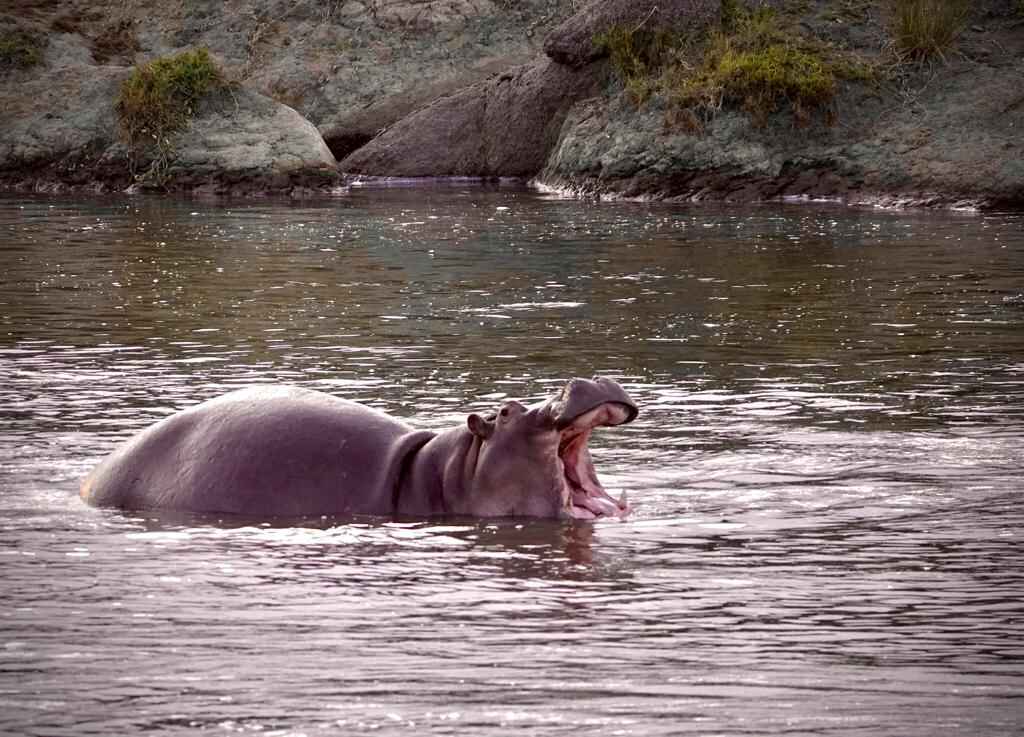
- Be cautious during activities like fishing — crocs often lurk just beneath the surface. Hippos are another animal to encounter, and I have had my fair share of heart-stopping moments with hippos!
If you’re staying at a riverside lodge, always ask about croc activity before going near the water. Don’t assume it’s safe just because you don’t see one.
7. Know the Danger Zones — and When to Be Alert
Some key moments when predators are more active — and you should be more alert:
- Dawn and dusk: Prime hunting times.
- During a kill or feeding: Never approach animals that are eating — they’re highly territorial then.
- If babies are nearby: This goes for all wildlife — moms are extremely protective. I cannot emphasise this enough.
And if you’re camping or in an unfenced lodge: keep your tent zipped, don’t leave food outside, and never walk alone at night.
8. Trust Your Guide — But Trust Yourself Too
Safari guides are highly trained and deeply knowledgeable.
But you’re responsible for your own safety too.
If something feels off, say something. Ask questions. Follow safety briefings carefully.
For self-drivers (like in Kruger National Park), read the park rules, stay on designated roads, and never exit your car unless at a clearly marked safe zone.
Final Thoughts
I really hope that the above doesn’t scare you or put you off going on a safari. It’s just better to be well prepared than not.
Part of a safari is to enjoy some heart racing moments – for all the right reasons. Being close to Africa’s top predators is one of the most humbling and powerful experiences in the world.
But with that power comes the need for caution, respect, and awareness.
Stay alert. Stay calm. Listen to your guide. Follow the rules. And you will be completely fine.
And remember: you’re not just there to witness nature — you’re a guest in its wildest corner.
Have questions about planning a safe safari? Or want insider tips on the best predator-viewing locations? Drop them in the comments or follow along for more expert safari travel insights.