
And why they’re worth every penny!
When you go on holiday, not all accommodation is created equal. We all know that. While a guest house or Air Bnb could be really lovely, it’s not quite the same as staying in a 5-star hotel with all the bells and whistles.
And the same goes for a safari.
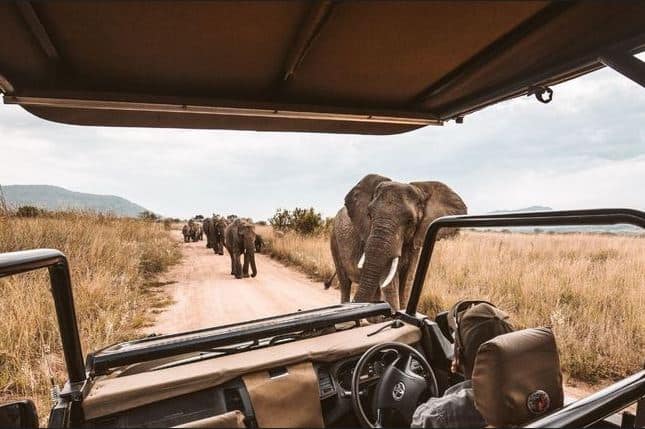
You do get the lodges that aren’t as luxurious as others, but, the beds are comfortable, the staff are attentive, you still enjoy the game drives that are included, still have the meals included, and you might even have an ellie or two pop around for a visit or a drink from the swimming pool.
For example, Isambane Camp is in a reserve near the Kruger National Park, South Africa. They have received great reviews, you can see the elephants come into the camp, they have comfortable rooms, wifi, meals and game drives are included. What’s not to love?
For many people, heading off to Africa on a safari is a once-in-a-lifetime experience, but if you’ve ever browsed safari packages, you might have experienced sticker shock.
Some safaris can indeed be expensive, but understanding why can help you appreciate the incredible value packed into these adventures.
More importantly, it’ll show you why a safari is worth every dollar!
But as I said earlier, there are different tiers to safaris, and it depends what type of safari you are booking.
Are you jumping into a large truck with a group of other people, staying in basic tented accommodation? Or are you flying around in the bush planes, from one camp to another, selecting to stay in luxury lodges?
Lodges are in Remote Destinations and Infrastructure
The more authentic safari lodges are ones located far from cities and towns, and away from highways and busy roads.
In many cases, you’re in the middle of a national park or private reserve, surrounded by nature, where animals roam freely.
But bringing you this pristine experience comes with logistical challenges.

Most safari lodges and camps are located in remote areas, which means building and maintaining infrastructure — like roads, airstrips, and lodges — is incredibly costly.
Moreover, transporting goods and supplies (think food, fuel, and even clean water) to these remote destinations adds to the expense.
Luxury camps and lodges often pride themselves on offering top-notch services and amenities despite being far from civilization.
You’re not just paying for a roof over your head — you’re investing in the magic of being in untamed nature, with all the comforts of home.
Conservation Efforts and Park Fees included in Your Safari Cost
One of the biggest factors driving up the cost of a safari is conservation.
African wildlife and landscapes are fragile ecosystems that need protection, and a substantial portion of what you pay goes toward maintaining and safeguarding them.
National park fees, conservancy fees, and contributions to wildlife protection initiatives are all part of your safari cost.
By paying these fees, you’re directly supporting conservation efforts that help preserve endangered species, reduce poaching, and ensure that local communities benefit from the presence of wildlife.
In short, your safari experience is a vital part of protecting Africa’s for your children, and your children’s children.
Highly Trained Guides and Personalized Experiences
Top safari guides undergo years of training, learning about wildlife behavior, tracking, the environment and of course, safety.
They can spot animals you’d never notice and tell you the most fascinating tit bits about their habits, their movements, their diets, and so much more.
It always fascinates me when going on a night drive, the guide stops – in the dark- and shows you a chameleon!

Safaris are the opposite of travelling to a major city around the world.
Think Paris – queues or people lining up to get up the Eiffel Tower, or even Cape Town with the queues of people waiting their turn to go up Table Mountain in the cable car.
Unlike mass tourism, where you’re shuffled from one crowded site to another, safaris offer quiet and personal experiences with nature.
You’ll find most safari lodges are small and definitely more intimate. If you stay for a number of days, it becomes difficult to actually say goodbye when it’s time to leave.
Whether it’s a private game drive, bush walks, or meals under the stars, these are the small things that one doesn’t often thing of, that does add to the safari’s exclusivity and cost.
Safaris are an All-Inclusive Experience
One of the key reasons safaris can seem expensive is because most safari lodges operate on an all-inclusive basis.
This means that once you arrive, nearly everything is covered. A typical safari package will include (please note that this changes from camp to camp, so you need to double check before you book):
- Accommodation
- All meals
- Teas, coffees, high tea snacks, and local beverages (usually including local alcohol)
- Usually to daily game activities a day (usually game drives or guided walks)
- Laundry services
- National park fees or conservancy fees
If you think about it, boats and game drive vehicles not only need fuel to run, but they require maintenance. This is all ‘included’ in the cost of your safari.
This all-inclusive booking not only simplifies your trip but also ensures that you’re getting the full safari experience without worrying about added costs.

The game activities are guided by the guides who are at the same time, hosting you. Meals and drinks are catered to your preferences and requirements. Local alcoholic drinks are included.
But ‘local beverages’ doesn’t mean just beer and wine are included. Local beverages also includes your off-the-shelve gins, whiskeys and so on. Cocktails are included.
It’s when you start talking champagnes, premium wines and top-of-the-range whiskeys that there will be an additional charge.
You get to enjoy an adventure-packed itinerary, local flavors, and seamless hospitality, all bundled into your trip price.
Luxury Accommodations in the Bush
Though you’re far from urban city life, many safari lodges and camps offer high-end amenities you might expect from a five-star hotel: gourmet dining, infinity pools, and luxurious tented camps with panoramic views.
The cost reflects the effort of maintaining these standards in such a remote location.

From sundowners overlooking the savannah to fine dining under the African sky, the safari experience blends adventure with luxury.
You aren’t just paying for a bed — you’re paying for the uniqueness of wild nature and creature comforts that you won’t find anywhere else.
Lodges are Exclusive and Have Limited Access
Safari tourism is intentionally kept small, and one reason is to minimize the impact on the environment and wildlife.
Most national parks and reserves have strict limits on the number of visitors, lodges, and vehicles allowed at any given time.
This ensures that the wildlife and vegetation remains undisturbed and that guests can enjoy an uncrowded, intimate experience.
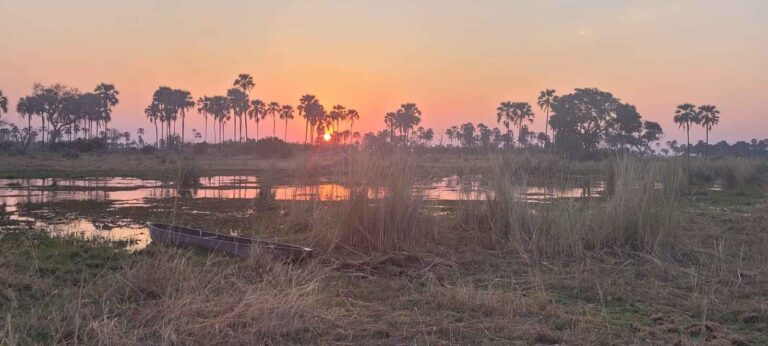
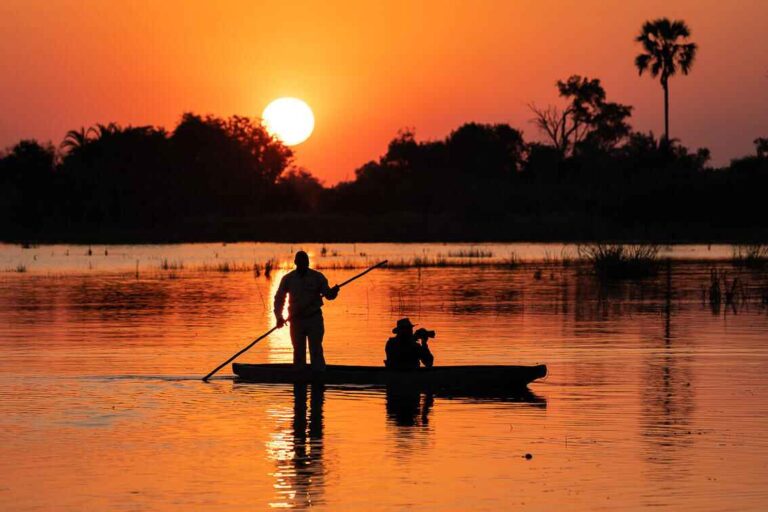
Mokoro trip in Botswana – no-one and nothing else around except for us
While this exclusivity adds to the cost, it also guarantees that your safari won’t feel like just another ‘tourist trap’.
Instead, you’ll have the unique privilege of seeing Africa’s gorgeous animals in their natural habitat without hordes of people around you.
Safari Costs often Support Local Communities
Safaris contribute to local economies, providing jobs to people in the communities living near national parks and reserves.
Many safari lodges and operators actively employ local staff, train them in hospitality, and invest in surrounding communities.
By booking a safari, you’re helping to support these people, from the lodge staff to the guides, trackers, and conservation workers.
Moreover, many safari operators are involved in philanthropic efforts, such as building schools, funding healthcare, and improving infrastructure in rural areas.
Some are involved in school feeding projects and providing the children with meals.
This aspect of sustainable tourism means that your money goes beyond paying for your experience — it also improves the lives of local communities.
Why It’s Worth It
While safaris be costly, the experiences and memories you gain are priceless.
Imagine watching a pride of lions resting under a tree, right in front of you, or elephants bathing in a waterhole at sunset with the babies playing in the mud, or witnessing the Great Migration in East Africa, thundering across the plains.
These are moments that can’t be replicated anywhere else on earth.
Beyond the breathtaking wildlife and landscapes, your safari is an opportunity to be part of something bigger — conservation, cultural preservation, and environmental sustainability.

It’s an investment not just in your travel experience but in the future of Africa’s wild places.
My Personal View
Yes, some safaris can be expensive, but they are so much more than just a holiday.
It’s a real journey into some of the last truly wild places on earth, filled with adventure, often luxury, and the chance to witness incredible wildlife up close.
By understanding the costs involved, you can see the value and feel good knowing your trip is contributing to vital conservation and community efforts.
So, if you’re dreaming of a safari but hesitating because of the price, remember that you’re not just paying for a trip — you’re paying for an unforgettable, life-changing experience that will stay with you forever.
Ready to pack your bags? Africa is waiting!